
What is Reiki? Reiki isn’t magic.
It’s your body remembering how to breathe again. A lot of people hear the word Reiki and picture something mysterious or “woo.” But the truth is much more simple and much more human. Reiki works because your body already knows how to relax and reset when it’s given the right conditions.
Slow breathing. Warm, steady hands. Calm, focused presence. Gentle, predictable touch.
Nothing dramatic. Nothing forced. Just your nervous system shifting out of survival mode and into a state where healing can actually happen. When that shift happens, things change. Your muscles soften. Your thoughts slow down. Your heart rate eases. Your body finally gets a moment to repair itself the way it was designed to. That’s the real power of Reiki, your own natural ability to recalibrate when someone creates a safe, steady space for you.
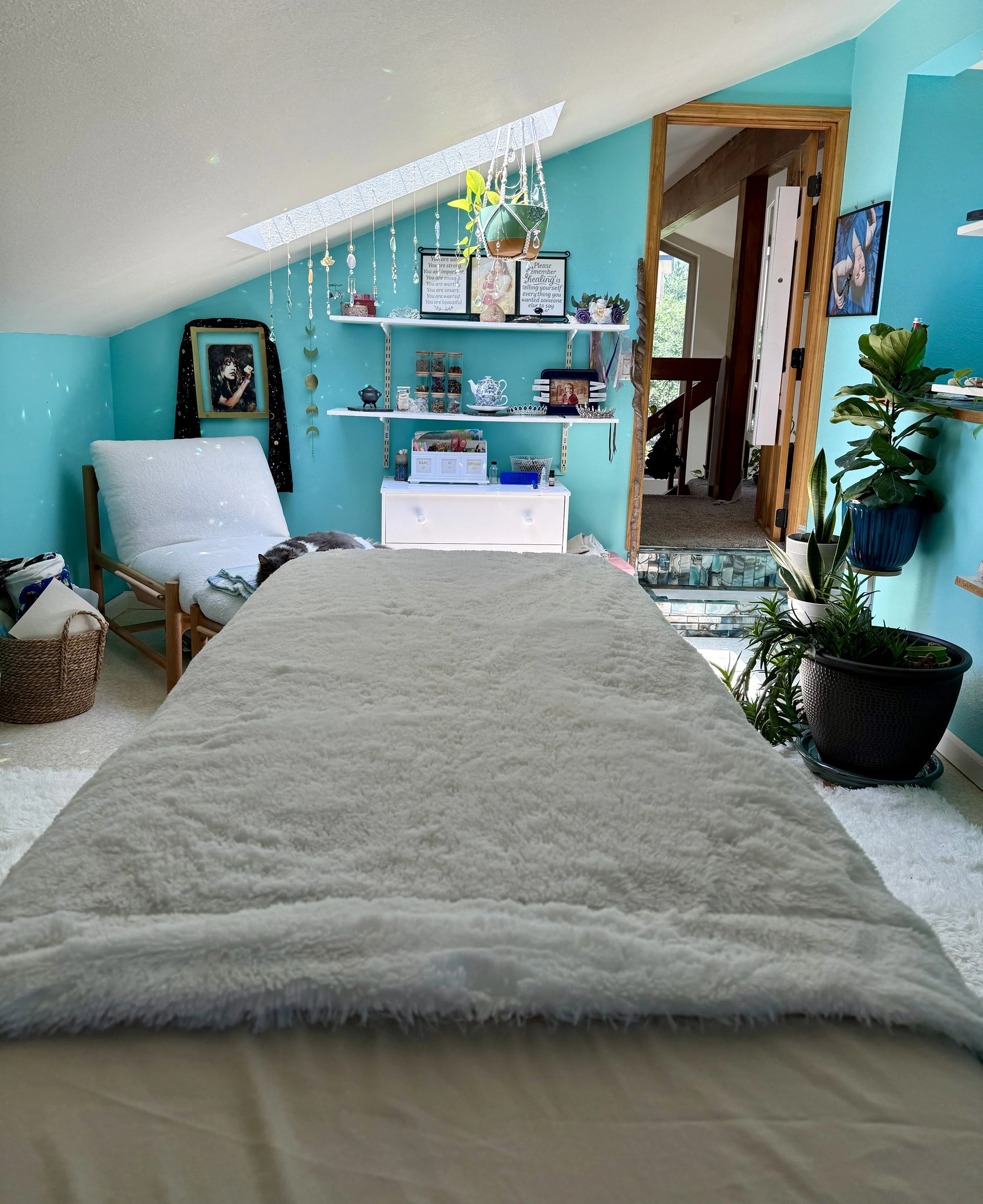
You don’t have to “believe” in anything.
You don’t have to be spiritual. You don’t have to understand energy. You don’t have to know what chakras are. You only have to be human. Reiki isn’t about belief. It’s about giving your body permission to stop bracing and start restoring.
What I actually do during a session
I’m not “doing something to you.” I’m not forcing energy. I’m not trying to fix you, because you’re not broken. I’m holding a grounded, steady presence while your system does what it already knows how to do when it feels safe. That safety is what allows your body and emotions to unwind layers you’ve been carrying for too long.
Reiki at Mystic Moon Healing
Reiki with me isn’t just “lay down and leave.” It’s space to exhale. Space to feel what’s really there. Space to let your nervous system come down from the constant “on” switch. Sometimes that feels peaceful. Sometimes it brings things up that need to be released. Both are part of real healing. You don’t have to show up calm. You don’t have to have it together. You just have to show up. Your body will handle the rest.
A Brief History of Reiki
Reiki began in Japan in the early 1900s with a man named Mikao Usui, who was seeking a deeper understanding of healing and well-being. Through study, meditation, and spiritual practice, he developed a method of gentle, hands-on support designed to help the body return to balance. Usui’s teachings were passed to Chujiro Hayashi, a physician who helped organize Reiki into a more structured practice. One of his students, Hawayo Takata, brought Reiki to the United States in the late 1930s. From there, it gradually spread throughout the Western world. While Reiki’s origins are spiritual in nature, modern Reiki sessions are simple and practical. The focus is on creating a calm, steady environment where the body and nervous system can relax, supporting the body’s natural ability to restore itself. Today, Reiki is practiced worldwide in wellness settings, hospitals, hospice care, and alongside other supportive therapies as a gentle way to reduce stress and promote relaxation.